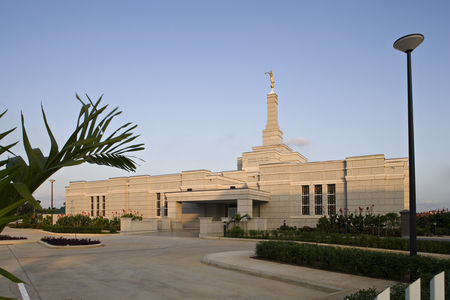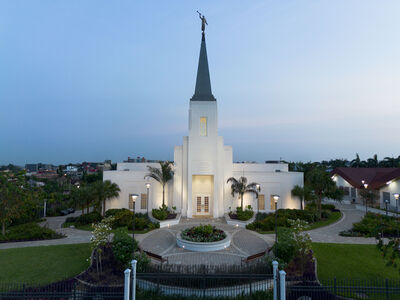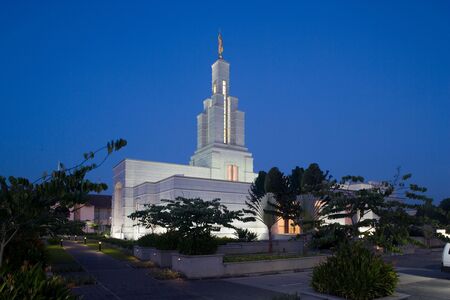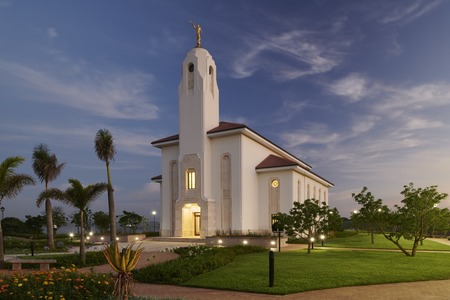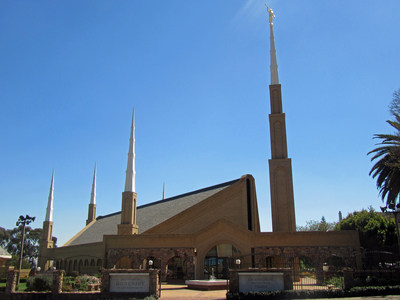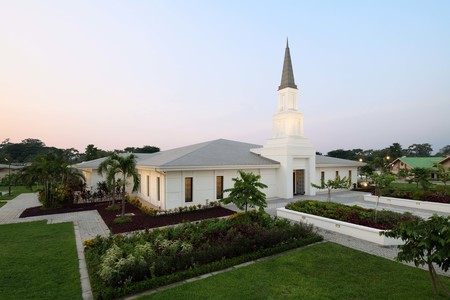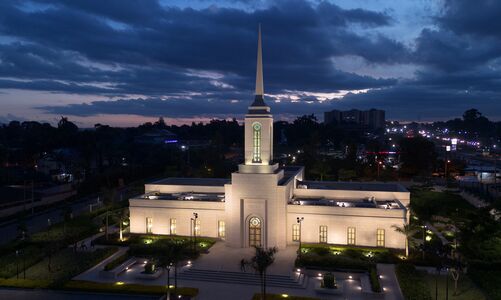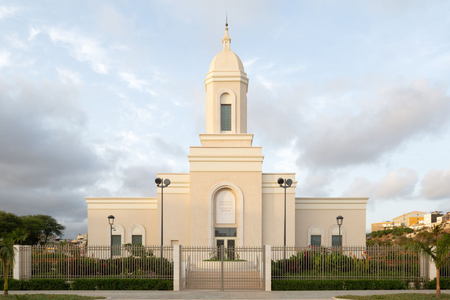
Alabang Philippines Temple
Davao Philippines Temple
Harare Zimbabwe Temple
214th dedicated temple in operation
© Intellectual Reserve, Inc. All rights reserved.
Services
NO visitors' center open to the publicNO arrival center available
Patron housing available
Distribution center on site (Store Locator)
Announcement:
3 April 2016Groundbreaking and Site Dedication:
12 December 2020 by Edward DubePublic Open House:
22 January–7 February 2026 | 16 daysDedication:
1 March 2026 by Gerrit W. GongSite:
6.7 acres | 2.7 hectaresExterior Finish:
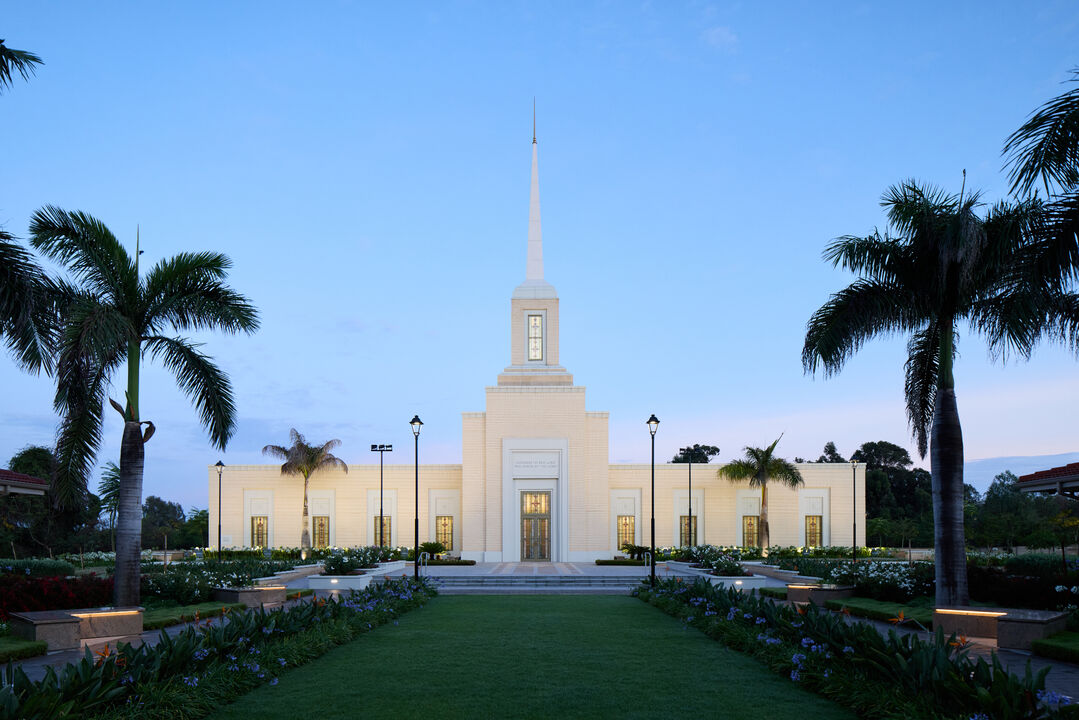
Corobrik Golden Wheat Travertine face brick and precast concrete trim and parapetsArchitectural Features:
Single attached end spireOrdinance Rooms:
Two instruction rooms, two sealing rooms, and one baptistryTotal Floor Area:
17,247 square feet | 1,602 square metersHeight:
103 feet 4 inches | 31.5 metersElevation:
4,990 feet | 1,521 metersTemple Facts
The Harare Zimbabwe Temple was the first temple built in Zimbabwe and the ninth in Africa, following the Johannesburg South Africa Temple (1985), Accra Ghana Temple (2004), Aba Nigeria Temple (2005), Kinshasa Democratic Republic of the Congo Temple (2019), Durban South Africa Temple (2020), Praia Cape Verde Temple (2022), Nairobi Kenya Temple (2025), and Abidjan Ivory Coast Temple (2025).
Among the guests at the Harare Zimbabwe Temple open house were President Emmerson Mnangagwa, president of Zimbabwe, and second vice president Kembo Mohadi.
Temple History
Announcement
In April 2016, at the Sunday morning session of the 186th Annual General Conference, President Thomas S. Monson announced the construction of the first temple in Zimbabwe in the capital city of Harare, much to the rejoicing of the Zimbabwean Saints who had prayed and prepared for this day for many years.
Church membership had been growing steadily in Zimbabwe where there were 26,000 members organized into six stakes and two districts—three of those six stakes being headquartered in Harare. Prior to the temple announcement, Zimbabwe had been the country with the second highest number of Church members without a temple (Nicaragua being the highest). Members desiring to participate in temple worship drove 13 hours to reach the Johannesburg South Africa Temple. Other nearby African nations would also benefit from the temple including Zambia, Mozambique, and Malawi.
Site
The Harare Zimbabwe Temple was constructed on the site of the stake center for the Harare Zimbabwe Stake on Enterprise Road in the Highlands neighborhood of Harare. President Russell M. Nelson toured the site while visiting Harare on April 17, 2018, as part of his world ministry.
Rendering
On October 1, 2020, an official exterior rendering of the Harare Zimbabwe Temple was released to the public, featuring a 17,250-square-foot temple with a spire rising over the main entrance. Housing facilities would stand on either side of the temple.
Groundbreaking
Elder Edward Dube, a native of Zimbabwe and first counselor in the Africa South Area presidency, presided at the groundbreaking for the Harare Zimbabwe Temple on Saturday, December 12, 2020. His Excellency Emmerson Mnangagwa, president of the Republic of Zimbabwe, was also in attendance. President Mnangagwa praised the Church in his remarks, saying, "The contribution of the Church to national development and social well being of the citizenry cannot be overemphasized." In his site dedicatory prayer, Elder Dube said, "As we watch the rising of this building from the ground up, may we also turn our hearts upward to Thee and Thy Son, our Savior Jesus Christ."1
Open House and Dedication
The public was invited to tour the newly constructed Harare Zimbabwe Temple from Thursday, January 22, through Saturday, February 7, 2026. The open house event began with a media day held on Monday, January 19, followed by two days of tours for invited guests. Elder Gerrit W. Gong of the Quorum of the Twelve Apostles dedicated the temple on Sunday, March 1, 2026. The dedicatory session was broadcast to all congregations in the temple district.2
Temple Design
Exterior
The building shell is constructed of cast-in-place concrete with concrete block infill walls. The exterior is clad with Corobrik Golden Wheat Travertine face brick and precast concrete trim and parapets.
The art glass is designed by Paton Taylor Architects in conjunction with Fanus Boshoff. It’s a geometric-style pattern and includes a floral motif to represent the national flower, the flame lily. The coloring is pulled from that of native flora and complements the landscaping.
This temple’s landscape features hardy, locally sourced plants to ensure long-term succession. Feather duster and jacaranda trees line the approach, creating a picturesque and memorable entrance. The landscape design is by Uys & White.
All fencing and all vehicular and pedestrian entrance gates are galvanized mild steel palisade, finished with an epoxy powder coat.
The exterior design is based on simple triangular forms found in the architecture and indigenous culture of Zimbabwe.
Interior
The carpets are rendered in neutral tones, complementing the patterns found in the art glass. The sculpted carpet design thoughtfully integrates both geometric elements and floral motifs also inspired by the art glass.
The floral motifs in the entry rug feature flowers native to Harare, including the flame lily, Aloe ballii, Yoruban bologi, African lettuce, terracotta gazania, Aspilia mossambicensis and Wentzel’s sugarbush.
Hard surface flooring throughout the temple consists of porcelain tile, paired with Sultan Beige stone baseboards and countertops sourced from Turkey. Accent stones in shades of green and deeper tan add visual interest and warmth to the overall palette.
The decorative painting, designed by Paton Taylor Architects, draws inspiration from the geometric and diamond petal patterns found in the art glass. These designs subtly echo forms of local flora and fauna, including Zimbabwe’s national flower, the flame lily. The color palette also reflects the natural hues of the region’s landscape, creating a cohesive and culturally resonant aesthetic throughout the space.
Art glass located at interior doors is the same design as the exterior glass in both clear and textured variants. Glass was fabricated by Paton Taylor Architects in coordination with Fanus Boshoff.
Decorative millwork is located at the recommend desk; in the screen wall, altar, pews and proscenium in the instruction rooms; and in the altars in sealing rooms. The patterns are geometric designs with diamond veneers that repeat the patterns from the art glass.
The font railings’ design is simple to match the simplicity of the architecture.
The hardware’s style matches the style of the rest of the building. The finish is a bronze-brass mix used throughout the temple and a French gold finish in the sealing and celestial rooms.
The ceiling is made of drywall, plaster and acoustic tiles. Crown molding is painted solid wood, with concealed lighting in the sealing and celestial rooms to cast a soft glow onto the ceiling.
Walls are painted finishes, with porcelain tiles used in the restrooms and service rooms.
Original artwork used in the interior includes “Sua Pan Grasslands Botswana,” “Dusty Elephants, Sapi River” and “Boni Buffs” by Paul Augustinus. There are approximately 45 total art pieces throughout the temple, focusing on the Savior Jesus Christ and the Creation.
- "Groundbreaking Held for the Zimbabwe Harare Temple," The Church of Jesus Christ of Latter-day Saints News Release, 12 Dec. 2020.
- "Open House and Dedication Dates Announced for the Harare Zimbabwe Temple," The Church of Jesus Christ of Latter-day Saints News Release, 18 Aug. 2025.